Meme pages are now a media line in Indian marketing plans
TL;DRAt a glance
- Indian brands now plan meme pages like influencers: briefed, budgeted and measured.
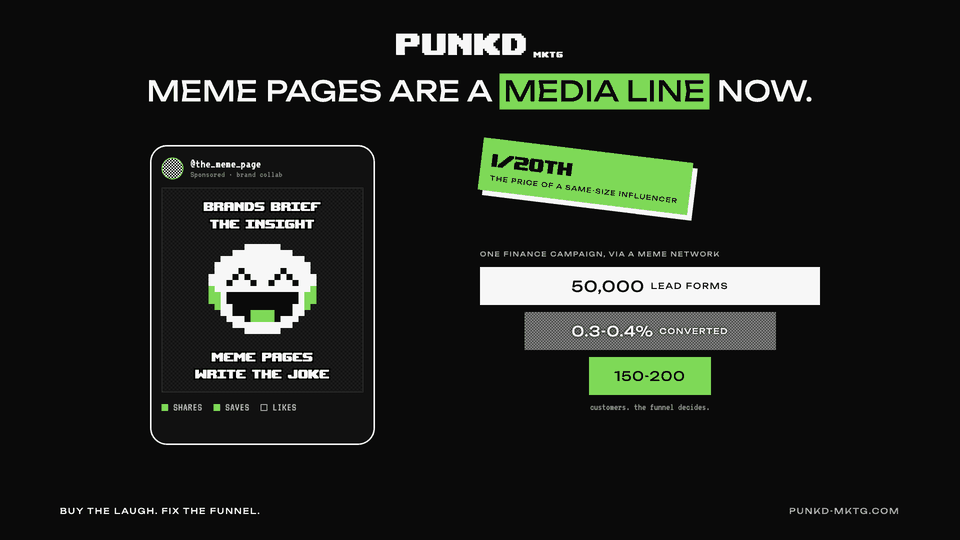
- A 10-million-follower meme page can cost about a twentieth of a same-size influencer.
- Brands pay for timing and humour, not just reach.
- One finance campaign got about 50,000 leads; 0.3-0.4% became customers.
- Judge a page on Reel views and shares, not follower count.
- The meme brings attention. Your funnel decides the sale.
Meme pages used to be the thing brands hoped would mention them for free. Now they sit in the media plan next to influencers and paid social. afaqs! asked agencies and meme networks how it works, what it costs and what it delivers (12 October).
The short answer: it is cheap attention, and attention is only the first step. Below: the prices, the brief, the maths, and how to stop the laugh from leaking out of your funnel.
WHY BRANDS STARTED PLANNING MEME PAGES
Viren Vesuwala of White Rivers Media says meme pages are now planned "like other media touchpoints such as influencers". RVCJ Digital Media says brands are moving from one-off posts to always-on activity: launches, festivals, sports moments and streaming shows, planned alongside creators, paid media and video.
The categories buying in are wide: cars, packaged goods, tech, fintech, e-commerce, fashion, food delivery, gaming, beauty and financial services.
THE PRICE GAP, AND WHY IT IS NOT LIKE FOR LIKE
Idiotic Media's Sankalp Samant gave afaqs! his numbers. A meme page with 10 million followers charges about a twentieth of what an influencer that size can (about 50,000 rupees a post vs around 1 million rupees). A 5-million page with engagement above 1% sits lower still.
But these are different products. Ashutosh Valani of RENÉE Cosmetics puts it best: "Influencers lend a brand their face; meme pages lend it their voice." An influencer is a personal recommendation. A meme page is a joke the audience already trusts the page to tell.
Exclusivity, original content, festival or sports timing and guaranteed deliverables all push the price up.
WHAT YOU ARE ACTUALLY BUYING
Valani says brands are buying reach, but mainly paying for the pages' timing and humour. RENÉE ran meme-led work on a viral Ravi Kishan moment, with pages riffing on it "within hours, not weeks". No brand team moves that fast on its own.
Idiotic Media typically puts 15-20% of a bigger campaign budget into meme amplification. That is a supporting role, not the whole show.
HOW TO BRIEF A MEME PAGE
Brands now send insights and key takeaways, not scripts. Vesuwala's rule: protect the core message, factual accuracy, mandatory disclosures and brand safety. Loosen your grip on everything else.
RVCJ's A. Aziz Khan suggests formats that build curiosity first: carousels that reveal the brand after the hook, and Reels that build up before the product appears. And Valani's warning: "Humour ages fast and lands differently across audiences." Test before you scale.
THE MATHS: COST PER 1,000 REAL VIEWS
Followers are not reach. Khan says a 1-million-follower page with strong Reel views can be worth more than a 5-million page with weaker distribution.
Cost per 1,000 views = post price ÷ average Reel views × 1,000.
- Say page A charges $250 and averages 400,000 views a Reel: $0.63 per 1,000 views.
- Page B charges $600 and averages 250,000 views: $2.40 per 1,000 views.
The smaller page is almost four times cheaper for the same attention.
THE CONVERSION REALITY
RVCJ shared one finance campaign: about 50,000 people filled in a lead form, and 0.3-0.4% eventually received the service.
- 50,000 × 0.3% = 150 customers.
- 50,000 × 0.4% = 200 customers.
That gap between 50,000 hands up and 200 customers is not the meme's fault. Khan says it plainly: meme pages can drive interest, but conversion depends on product information, the website and the sales process. In other words, CRO (conversion rate optimisation: getting more of the people who arrive to actually buy).
HOW TO MEASURE IT
RENÉE judges meme campaigns on shares, saves and comment sentiment, not likes. RVCJ tracks Reel views, watch time and engagement, plus clicks, site traffic, app installs, coupon redemptions and sign-ups for performance campaigns. Use a unique coupon or link per page so you know which page earned its fee.
THE PUNKD TAKE
Meme pages are some of the cheapest attention in India right now, and most brands still treat them like a side hustle. That is a mistake. The bigger mistake is buying the laugh and sending it to a slow page, a long form and a sales team that calls back in three days. Cheap attention plus a broken funnel is still a broken funnel.
STEAL THIS
- Ask every meme page for Reel views and watch time from its last 10 posts. Ignore follower count.
- Brief the insight, the facts and the disclosures. Let the page write the joke.
- Test a hook-first carousel that reveals your brand on the last slide.
- Give each page its own coupon or link, and fix your landing page before launch.
- Report cost per customer, not cost per post.
THE SHORT VERSION
- Meme pages are now planned like influencers in India.
- They cost far less per post, but they are a different product.
- Judge pages on views and shares, not followers.
- The meme brings the crowd. Your funnel decides who buys.
Would you hand a meme page your brand's voice?
We buy attention and fix the funnel it lands in.
Book Free Consultation